‘Could experimental sensory translation of art works improve their accessibility for sensory diverse exhibition audiences?’
Eva Fotiadi is a researcher within the Situated Art, Design and Technology research group and a theory tutor at the St Joost School of Art and Design, where she is also a member of the Diversity Dialogues platform
Eva Fotiadi is a historian and theorist of interdisciplinary practices in contemporary art and design. She holds a Bachelor in archaeology and art history from the Aristotle’s University Thessaloniki (Greece), a Masters’ in Museum Studies from Leicester University (UK) and a PhD in contemporary art history from the University of Amsterdam. She has been a postdoc and visiting researcher at Free University Berlin and Princeton University. Since October 2025, Eva has been serving as a member of the External Advisory Board of the Hellenic Open University (H.O.U.) in Greece.
In her current research, Eva Fotiadi is studying contemporary artistic practices and art exhibitions that emphasize the multisensory character of the human body by bringing together curatorial theory and practice, experimental technologies, disability studies and crip theory. The research is focusing on the potentials of multisensory art and design both in the reimagining of access and the production of knowledge. At the core of the project lies the aim to bring disability scholarship and disability art activism to bear on art exhibitions and art education.
In September 2025 the edited volume by Eva Fotiadi titled, Exhibiting for Multiple Senses: Art and Curating for Sensory Diverse Bodies appeared by the publisher Valiz in the series Plural. In spring 2026 the accessible electronic publication will also be made available.

Inclusive Technology for Museums: Sensory Substitution and Augmentation for Inclusive Exhibitions
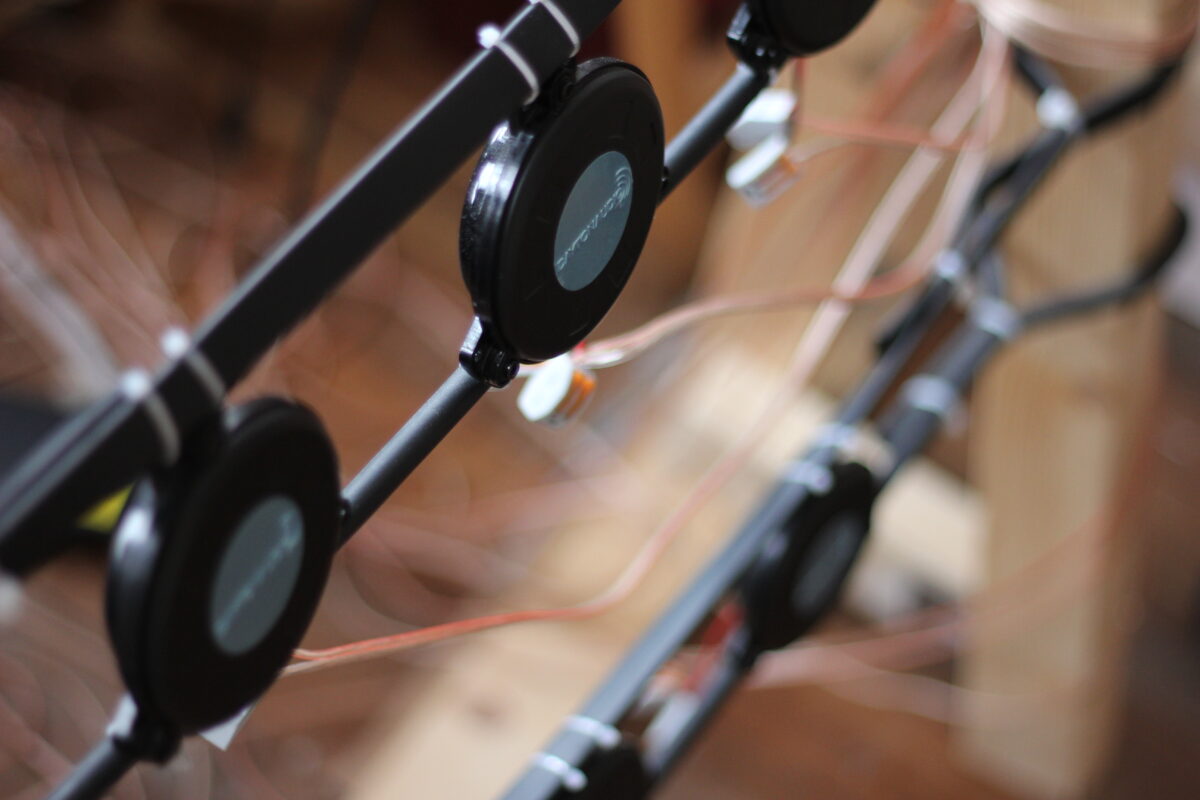
How can sensory augmentation and substitution technologies contribute to greater sensory inclusivity for diverse museum visitors?
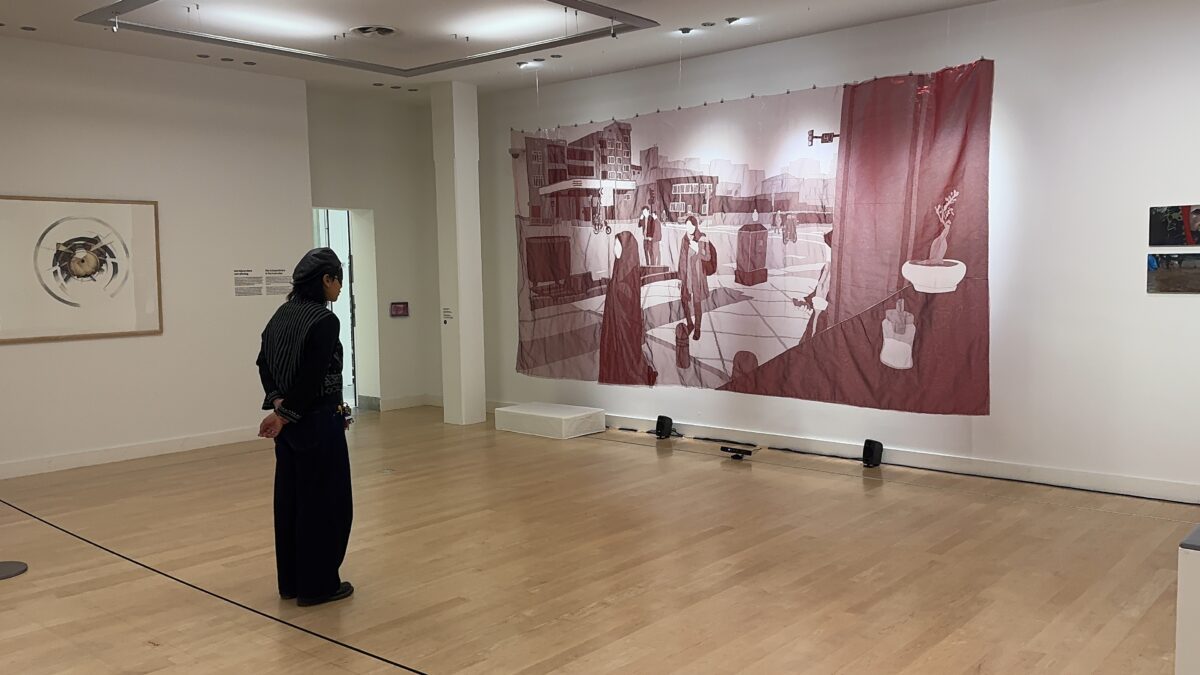

Exhibiting for Multiple Senses: Art and Curating for Sensory Diverse Bodies (2023 – 2026)
How do disability art activism and crip theory inform contemporary art curating, and the other way around?

Curating Inclusive Art Exhibitions (2021 – 2022)
This research explores how sensory translation technologies can enhance accessibility in art exhibitions without reinforcing divisions between “normal” and “special” audiences. Emerging Sensory Augmentation technologies—capable of translating information from one sensory modality into another—offer inclusive alternatives that engage all visitors, regardless of sensory ability.
Publications
Fotiadi, E. (2025, Dec) Exhibiting for Multiple Senses. Book presentation at Dublin Art Book Fair https://caradt.nl/2026/02/23/exhibiting-for-multiple-senses-at-the-dublin-art-book-fair-publishing-talk/
Fotiadi, E. (2025, Sep) Exhibiting for Multiple Senses. Art and Curating for Sensory Diverse Bodies. Valiz. Amsterdam, Netherlands. https://valiz.nl/en/publications/exhibiting-for-multiple-senses
Fotiadi, E. & Hollander, A. (2025, Sep) On tactile architecture. From vibroraised reliefs to theatre spaces. A conversation between Adi Hollander and Eva Fotiadi. Exhibiting for Multiple Senses. Art and Curating for Sensory Diverse Bodies, 143-157. Amsterdam: Valiz.
Fotiadi, S. E. (2025, Feb) Agonistic Spaces and Safe Spaces in Monuments and Public Art for Communities Sharing Trauma. The Palgrave Encyclopedia of Cultural Heritage and Conflict. I. Saloul, B. Baillie (eds.). Online first. https://doi.org/10.1007/978-3-030-61493-5_261-1
Fotiadi, E. (2024, Nov) Exhibiting for Multiple Senses: Artistic Research for Sensory Diverse Bodies. Workshop Sensorial Encounters: Haptic and Non-Visual Access in Art. Bibliotheca Hertziana, Rome
Fotiadi, E., Gouseti, F. (2024, Nov) ‘Art Monuments and Artistic Research: Diverse approaches to traumatic events of WW II and the Greek Civil War in the town of Kalavryta‘. In: Monuments for World War II. Memory and Oblivion in the Balkans and Central-East Europe. conference proceedings. Ed. by Areti Adamopoulou and Anna-Maria Droumbouki. Ioannina: University of Ioannina and Hellenic Foundation for Research and Innovation. Pp. 310-320.
Fotiadi, S.E. (2024) Multisensory Technologies for Inclusive Exhibition Spaces: Disability Access Meets Artistic and Curatorial Research. Multimodal Technologies and Interaction 8, no. 8: 74. https://doi.org/10.3390/mti8080074 https://www.mdpi.com/2414-4088/8/8/74
Fotiadi, E., Gouseti, F. (2024, Aug, in press) Monuments for World War II: Memory and Oblivion in the Balkans and Central-East Europe. Proceedings of the International Conference, Monuments for World War II Conference, Athens November 2023
Fotiadi, E (forthcoming 2023), Welcome and enjoy the ruins, in Aesthetics of Crisis, Ed. by Julia Tulke, The Digital Press of the University of North Dakota.
Fotiadi, E. 2022, On Southerness in contemporary art and theory, in Revisiting documenta 14’s magazine South as a State of Mind, special issue: Greece and the South, Journal of Greek Media & Culture, 8/2, 207–25. (peer reviewed)
Fotiadi, E. (2021) On the adventures of site-specificity: documenta 14 in Athens and Maria Eichhorn’s Art Project Building as Unowned Property, Field. A Journal of Socially Engaged Art Criticism, issue 18/19, spring.
Fotiadi, E. (2021) Community Art. Between situatedness and globalization, A Public Art Handbook, Ed. Angeliki Avgitidou, University Studio Press. [in Greek]
Research Group: Situated Art, Design and Technology
The research group Situated Art, Design and Technology (SADT) focuses on the societal embedding and embodiment of knowledge production that art and design research enables. The conducted research contributes to a deeper understanding of technological developments and their impact on people, society, and the environment, and to the development of situated approaches in the creative sector and beyond. In doing so, it advances a wider acknowledgement of artistic and design research as a mode of knowledge production, one that is grounded in creativity and critical imagination as a way of generating insight into, and intervening in, societal transitions driven by technology.
Read more
‘People are the product of their relationships with their environment. It’s important to understand how technological developments influence these relationships.’
Michel van Dartel 
‘‘Understanding how creativity and imagination emerge from interactions with our environment will lead to improved innovation processes, tools and technologies.’’
Alwin de Rooij
‘My practice explores how technology participates in relational embodied systems - how bodies, sensors, and materials co-compose stories of attention and response.’
Mark Meeuwenoord
‘Beauty lies in connecting different parties and creating equal opportunities. I believe in the power of kinship, collectiveness and critical thinking. ’
Eva van den Boogaard
‘My practice is situated in between different actors, in this shape-shifting middle many things can happen.’
Tara Karpinski
‘Imagination is the key to a strong inclusive society. Artistic work and situated design can contribute to a better understanding of the other.’
Jenny van den Broeke
‘Investigating the potential of sensory augmentation to bridge the sensory gap between deaf and hearing.’
Michel Witter
‘Through an interplay of design and research, the apt questions and necessary tools can be discovered and applied to each research project.’
Antal Ruhl
‘Humans are atmospheric beings, particles, dust, in intimate cycles of exchange, actors with an incredible force.’
Annemarie Piscaer
‘The tacit and embodied knowledge of practitioners about the complex reality of design can provide an important resource to innovate how we learn and teach’
Sarah Lugthart
‘How can the notion of the ‘script’ be used in a situated design practice? ’
Ollie Palmer
‘The ultimate goal is to provide people with the information, skills and tools that enable them to improve the quality of their daily lives.’
Simone van den Broek
‘For me, the iterative design-research process is an exciting journey towards designs that can transform human consciousness.’
Danielle Roberts
‘The essence of the situated, cinematic experience of dance lies in the mental interaction where the public becomes co-author.’
Noud Heerkens
‘Who benefits?’
Ivo Koolen
‘Getting comfortable with ambiguity enables designers to absorb feedback and use it to make better design choices.’
Gabri Heinrichs
‘I look at the ways in which citizens can play an active role in shaping their cities, and how new media and technology can contribute to this.’
Barbara Asselbergs
‘Power, control and chance play an important role in every creative process. I explore this complicated correlation.’
Michiel van Opstal
‘Attention during interaction is personal, not a given fact.’
Misha Croes