‘It is through the “not-knowing” that a stimulating and caring environment can be created to confidently share vulnerability.’
Risk Hazekamp is researcher in the Regenerative Art and Design research group at CARADT, the Art & Sustainability research group of the Research Centre Art & Society (Hanze) and the Centre of Design Research for Regenerative Material Ecologies (DREAM) at the Technical University Delft.
Risk Hazekamp (pronouns: they/them) is an interdependent artistic researcher and an art educator in the broadest sense of the word. Risk grew up in the city of The Hague and in the forests where the river Meuse flows from Belgium to France. Risk’s artistic practice is project-based and consists of both visual and textual more-than-human care processes to question and change existing systems through a combination of artivism, ecocentrism and regenerative forms of analogue (currently micro-organic) photography.
After their studies at the Willem de Kooning Academy in Rotterdam and the Jan van Eyck Academy in Maastricht, Risk worked and lived in Berlin for 11 years. Risk has taught at various art academies, including teaching photography from 2010 to 2014 at the Maastricht Academy of Fine Arts, before landing from 2015 onwards as tutor in the Art & Research department and the minor Arts & Humanity at St Joost School of Art & Design.
In 2020 they graduated magna cum laude from the ‘Advanced Master of Research in Art & Design’ of the Sint Lucas School of Arts in Antwerp and took part in two editions (2020 and 2021) of the ‘María Lugones Decolonial Summer School’, a collaboration between the Van Abbemuseum Eindhoven and Utrecht University. Most recently, they completed the course ‘On Friendship and the Political Imaginary’ at the University of Gothenburg.
Professional Doctorate Research
Currently, Risk is the first candidate pursuing a Professional Doctorate at CARADT, where they are conducting forward-thinking and regenerative research under the project ‘Unlearning Photography: Listening to Cyanobacteria’. This project investigates alternative analogue photographic practices, moving away from photography’s toxic histories towards an ecology of care. In collaboration with Cyanobacteria as more-than-human co-researchers, propositions are made to rethink human dominance, aligning with Risk’s commitment to ways of ceding agency to the other-than-human within an artistic care-ethical practice.

Unlearning Photography: Listening to Cyanobacteria
Risk Hazekamp, researcher from the Regenerative Art and Design group (previously the Biobased Art and Design group, 2018-2024) has received funding from Regieorgaan SIA for their PD project – Unlearning Photography: Listening to Cyanobacteria.
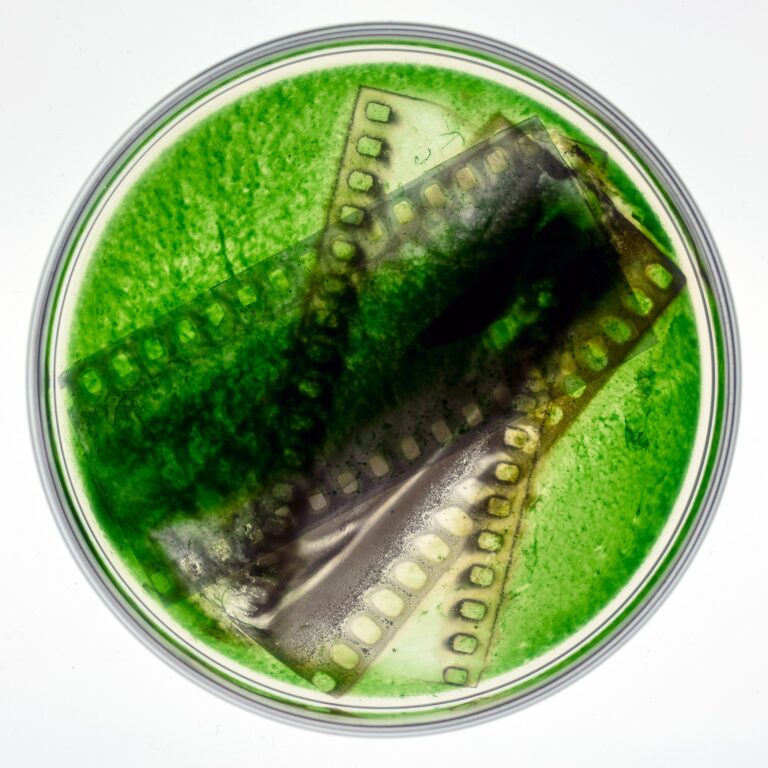
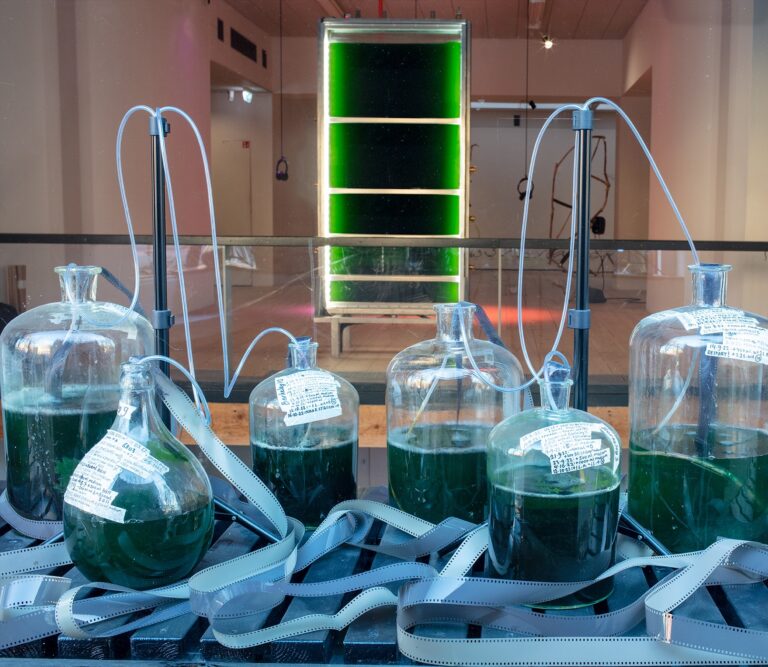
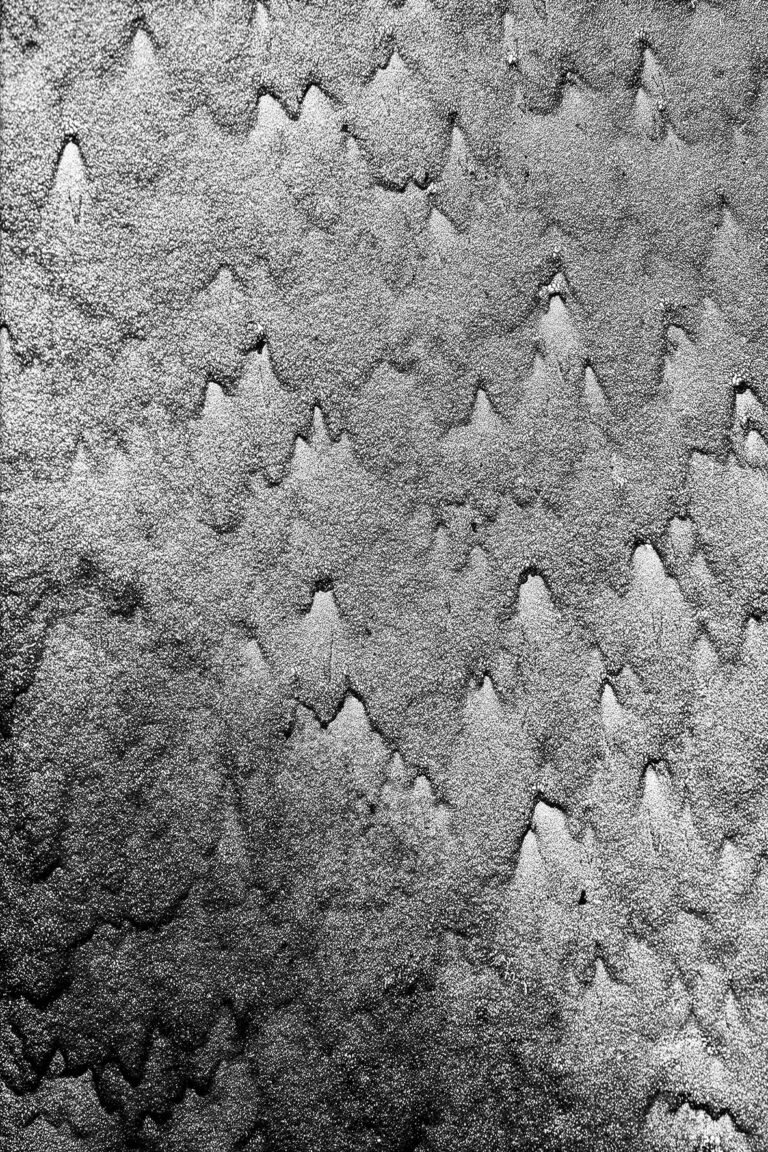


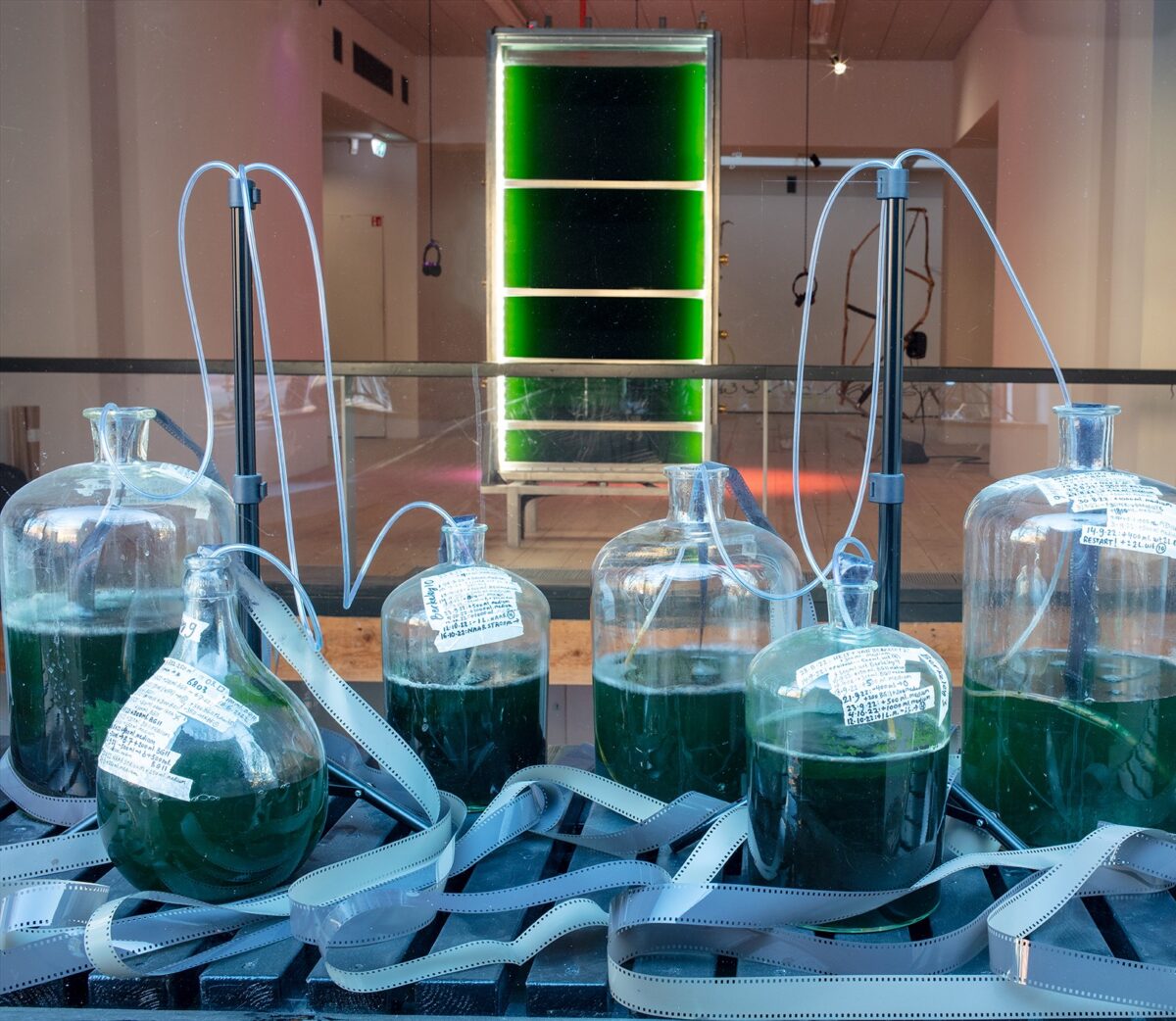
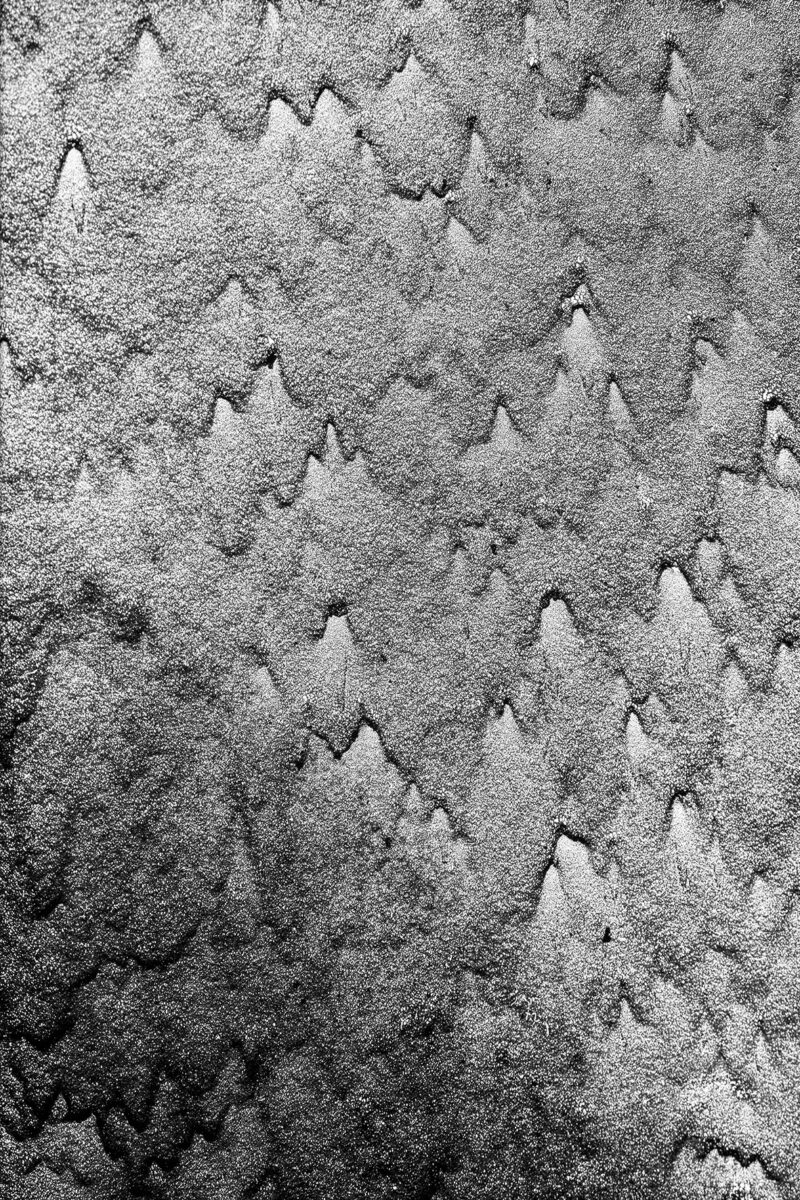
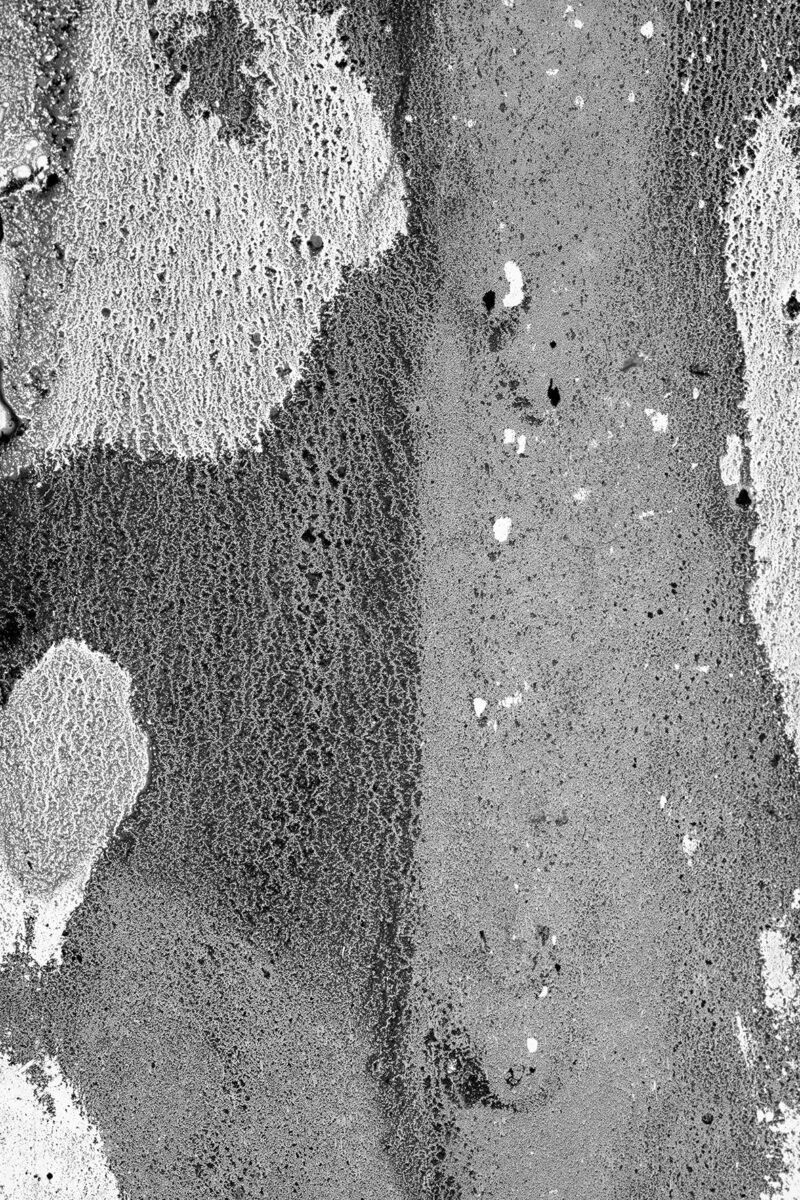

Unlearning Photography (2020 – 2023)
Unlearning Photography is a research project in which living photography is investigated. As an artist working with analogue photography, researcher Risk Hazekamp is facing the two inherent downsides of the photographic medium: its toxicity and its racism.
Toxicity and photography are intimately linked: for example, in the preservation of analogue photos by chemical fixation. Almost all analogue processes use non-degradable chemical compounds.
Photography’s racism is embedded in how the medium has been shaped by and used in violent colonial practices of defining, categorizing and creating the visible. But it is also present in technical aspects, such as the fact that film emulsion could not register dark tones the same way as light tones.


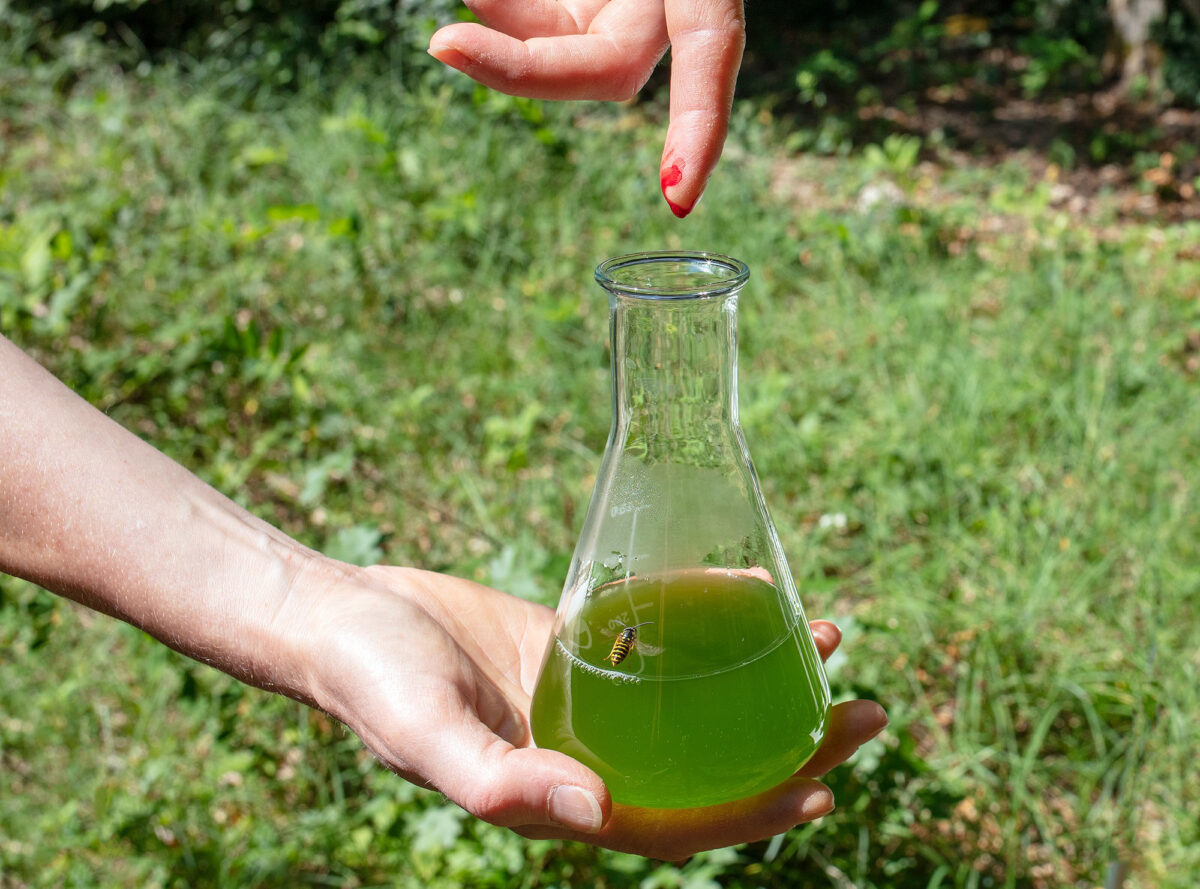
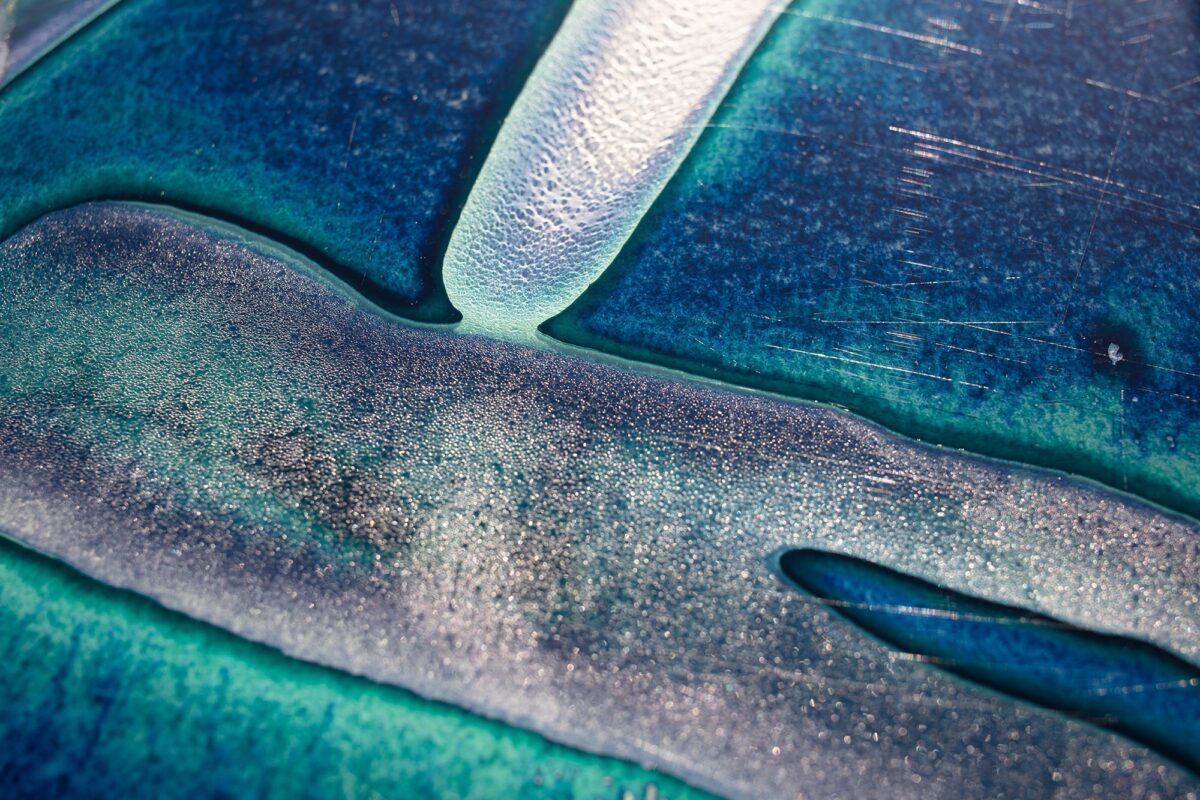


Publications
Hazekamp, R., Synechocystis sp. PCC 6803 (2025). “You press the button, we do the rest” – How to cede agency to the more-than-human? In Applied design research: The societal impact (pp. 362–379), K. Van Turnhout, P. Joore, R. van der Lugt, T. Nachtigall, & L. Terzieva (Eds.). Routledge/CRC Press. https://www.taylorfrancis.com/chapters/oa-edit/10.1201/9781003609766-24/press-button-rest-cede-agency-human-risk-hazekamp?context=ubx
Hazekamp, R., Ambrózy, M. (2025, Oct.) From wonder to disposal (3-day open lab) [Conference presentation]. ūmėdė: Post-media and related matter research festival + symposium, SODAS2123, Vilnius, Lithuania. https://caradt.nl/2025/11/06/open-laboratory-from-wonder-to-disposal-at-umede-research-festival/
Hazekamp, R., schäfer s. (2025, Jun.). Ecological response-ability [Conference presentation]. The resonance of PD research, LocHal, Tilburg, Netherlands. https://www.researchcatalogue.net/view/3558568/3788228
Hazekamp, R. (2025, Apr.). Practising living systems (Initiated and led by Judith van den Boom) [Conference presentation]. Compos(t)ing regenerative creative practice symposium, Nieuwe Instituut, Rotterdam, Netherlands. https://nieuweinstituut.nl/en/events/compost-t-ing
Hazekamp, R., Ambrózy, M. (2025, Feb.). Dancing and dirting: Close-sensing images. Landing No. 1: Edge of the Glacier, 17–36. https://doi.org/10.37522/775akg96
Hazekamp, R., Synechocystis sp. PCC 6803 (2025, Jan.). What does it mean to care for a unicellular micro-organism? Photography as mutualistic care [Conference presentation]. 3rd International care ethics research consortium conference: care, aesthetics, and repair, University of Humanistic Studies Utrecht, Soesterberg, Netherlands. https://cerc2025.com/6-panels-4
Hazekamp, R. (2024, Oct.). Limited ‘makeability’ of society. The societal impact of applied design research, NADR Symposium. Dutch Design Week, Eindhoven https://nadr.nl/events/the-societal-impact-of-applied-design-research/
Hazekamp, R., Coordes, H.H. (2024, Sep.) Expanded semantic levels in fashion // Unlearning photography: listening to Cyanobacteria [Conference presentation]. Encounters in artistic research, Minerva Art Academy https://www.researchcatalogue.net/portal/announcement?announcement=3025428
Hazekamp, R. (2024, Apr.). How can BioArt facilitate a living alternative photographic methodology to envision our world without a camera, through a non-chemical production process and with a non-human gaze? [Conference presentation]. Helsinki photomedia conference 2024, Aalto University, Finland.
https://helsinkiphotomedia.aalto.fi/wp-content/uploads/2024/04/94_Hazekamp_Risk_UnlearningPhotography.pdf
Hazekamp, R. (2024, Apr.). The art of mycelium teachings. [Book review: Y. Ostendorf-Rodríguez, ‘LET’S BECOME FUNGAL! Mycelium teachings and the arts’]. https://doi.org/10.5117/FORUM2024.1.008.HAZE
Hazekamp, R. (2023, Nov.). Cyanobacteria stories: Moving inside out of Elizabeth Povinelli’s “carbon imaginary”. TRIGGER: Magazine for Research, Reflection and Debate on All Things Photographic, (5), 14 – 24. FUTURES Yearbook: Energy. FOMU (Fotomuseum Antwerpen). https://fomu.be/trigger/articles/cyanobacteria-stories
Kuffour, S. (2023, Sep.). Traversing Risk: A journey into literature, image-making and gender with Risk Hazekamp. Brave New Lit, & STRAPAZIN, (152), 39 – 40. https://bravenewlit.xyz/works/traversingrisk/
Galema, J. A. (2023, May). Vertroebelingen van het binaire denken: In gesprek met Risk Hazekamp over het “ontleren” van fotografie. Metropolis M.
https://metropolism.com/nl/feature/49468_vertroebelingen_van_het_binaire_denken_in_gesprek_met_risk_hazekamp_over_het_ontleren_van_fotografie/
Hazekamp, R., Lykke, N. (2022, Oct.) Ancestral Conviviality. How I fell in love with queer critters, FORUM+, Volume 29, Issue 3, Oct 2022, p. 30 – 36. https://doi.org/10.5117/FORUM2022.3.008.HAZE
Hazekamp, R. (2022, Jul.) Unlearning photography: Precarious remediation, Re•source – Blueprint for a better future, The Sustainable Darkroom, London, p. 20 – 23. https://sustainabledarkroom.com/products/re-source
Hazekamp, R. (2021, Dec.) De kunstwerken die 2021 kleur gaven – volgens Risk Hazekamp, Mister Motley.
https://www.mistermotley.nl/de-kunstwerken-die-2021-kleur-gaven-volgens-risk-hazekamp/
Hazekamp, R. (2020, Dec.) Unlearning Photography, Mister Motley, Motley College. https://www.mistermotley.nl/unlearning-photography/
Research Group: Regenerative Art and Design
The Regenerative Art and Design (RAD) research group seeks to contribute to a new generation of regenerative designers and artists who address the pressing need for transitions that support planetary health. By taking whole systems responsibility through collaborative practices, the group aims to create transformative pathways for reimagining design futures grounded in care and ecological integrity.
Read more
‘How can art and design cultivate critical expressions rooted in ethics of care and relationality to influence ecological, social, and economic structures?’
Delfina Fantini van Ditmar 
‘I see Regenerative Design as newness continuously reoccurring throughout the making process’
Ariane Fourquier
‘How can we find new materials and products that rely on interdependence between communities and ecological systems rather than extraction?’
Hugo F. Garcia
‘A bio lab is a place of working with living organisms, brought out of their habitat so we can learn to think outside of the Petri dish. Let’s take care of these teachers!’
Michaela Davidová