Embodied Interaction
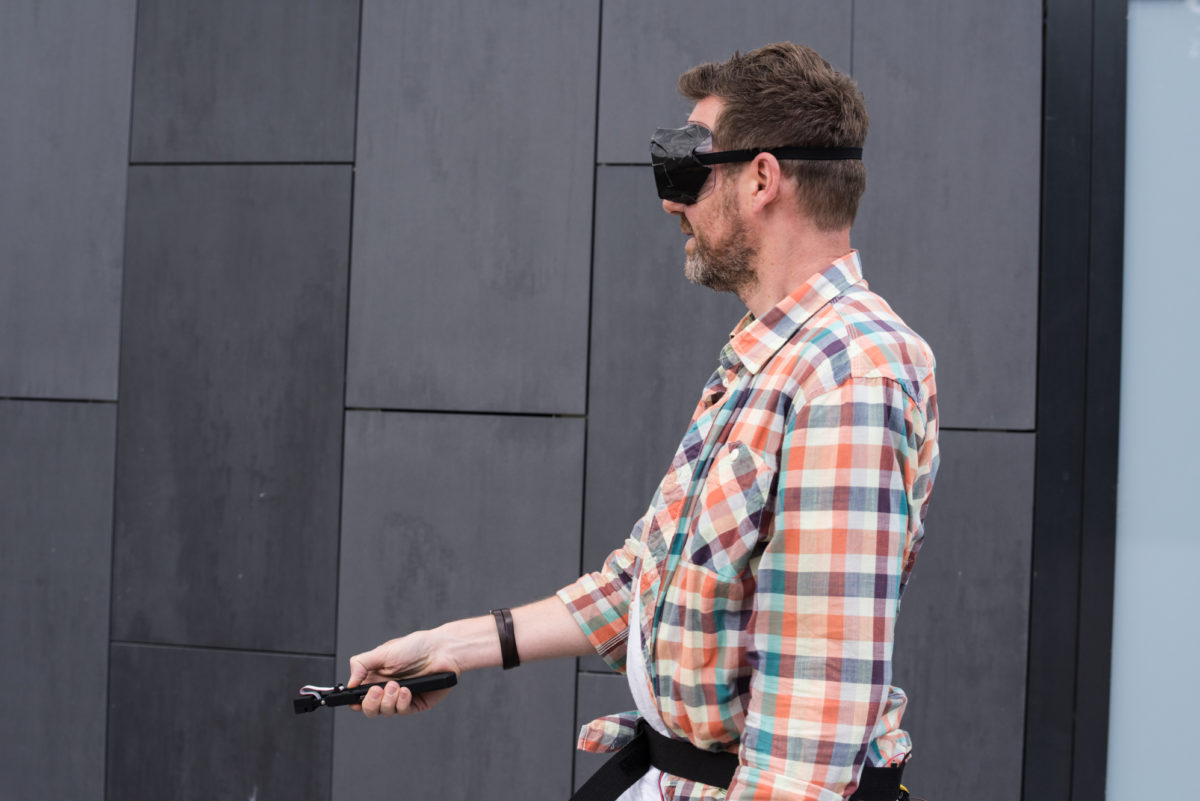
This research focuses on the design of tactile interfaces, using sensor technology.




 took place in Nijmegen, the Netherlands. This fifth edition brought together international researchers, designers, medical professionals, and members of the USH community to share knowledge and explore new perspectives.
On Saturday 21 June during the public USH2025 Symposium, Michel Witter, researcher at CARADT and senior lecturer in Interaction Design at Avans Creative Innovation, presented his work in a lecture titled:
In his talk, Witter introduced his research into sensory augmentation technologies that aim to bridge the sensory divide between Deaf and hearing people. As a PhD candidate at Tilburg University, he investigates how current technologies often fall short in enabling real-world perceptual integration. To address this, he is developing a co-creation toolkit that helps designers engage with diverse sensory experiences and create inclusive technological solutions.
Through concrete examples such as collaborative design processes involving Deaf and hearing museum visitors, Witter illustrated how new sensory modalities might allow people to hear invisible light or feel WiFi signals. His research challenges normative assumptions about perception and technology by prioritising situated, participatory approaches.

More about his lecture ‘Expanding Perception Through Inclusive Technology’ (in Dutch)
This research focuses on the design of tactile interfaces, using sensor technology.
‘Investigating the potential of sensory augmentation to bridge the sensory gap between deaf and hearing.’
Michel Witter, with a foundation in computer science and digital art, integrates technology and art in education. As a tutor since 2002 at Communication & Multimedia Design program of Avans, he specializes in information design and accessibility. Currently, Michel is researching sensory augmentation for his PhD.
Living in cities developed around data and acting within the inscrutable structure of our techno-society demands art and design that can help understand how we relate to these rapidly changing surroundings and to reflect on that relationship. The research group Situated Art, Design and Technology responds to this exigency by fostering a situated turn in art and design through a diverse portfolio of interdisciplinary research projects in partnership with academic and cultural partners, as well as with government and industry.
Read more
Thank you for your subscription! Please check your email inbox to confirm.