Caradt

Filter

  • Cultural and Creative Industries
  • Situated Art and Design
  • Regenerative Art and Design
  • Biobased Art and Design
  • All
Staff Alumni
Research Projects Archive

Search

The Color of Air at the Color Conference | Farbe und Ökologie

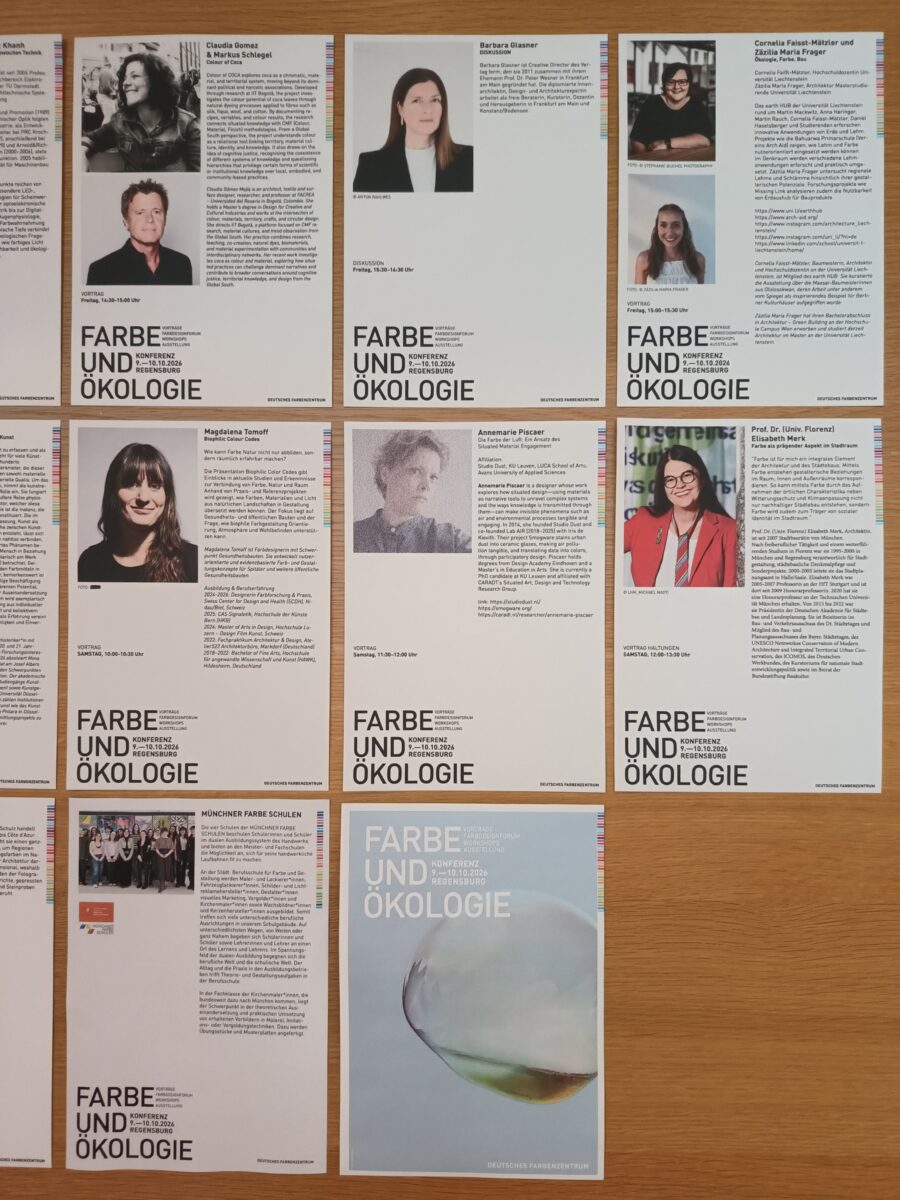
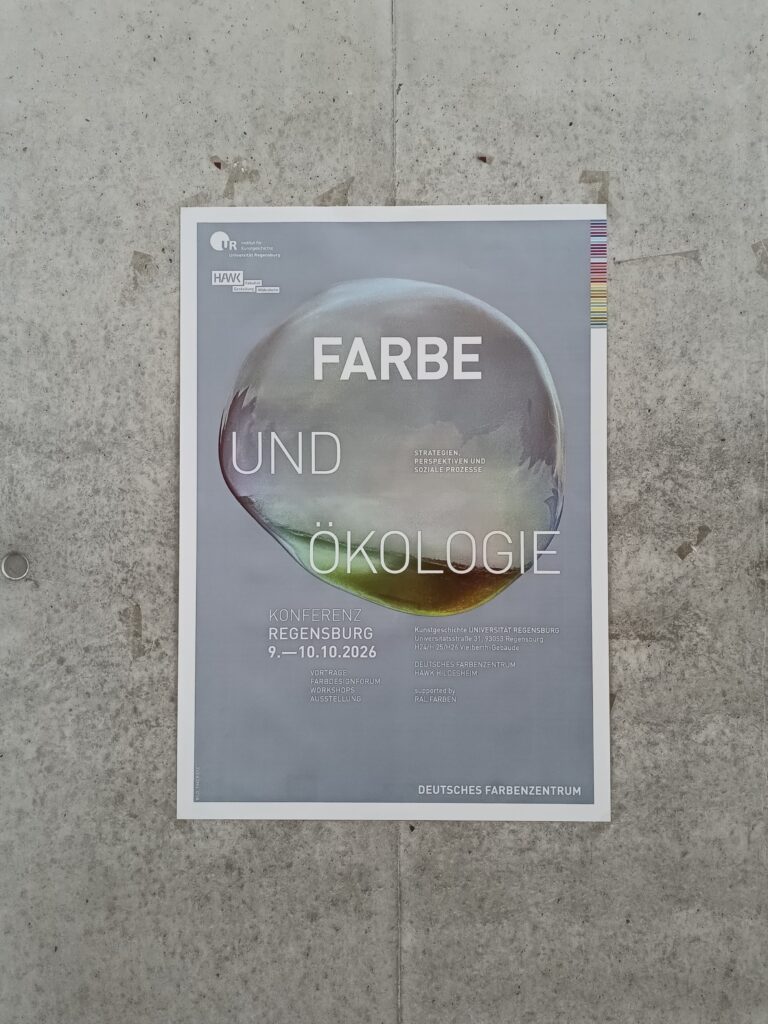
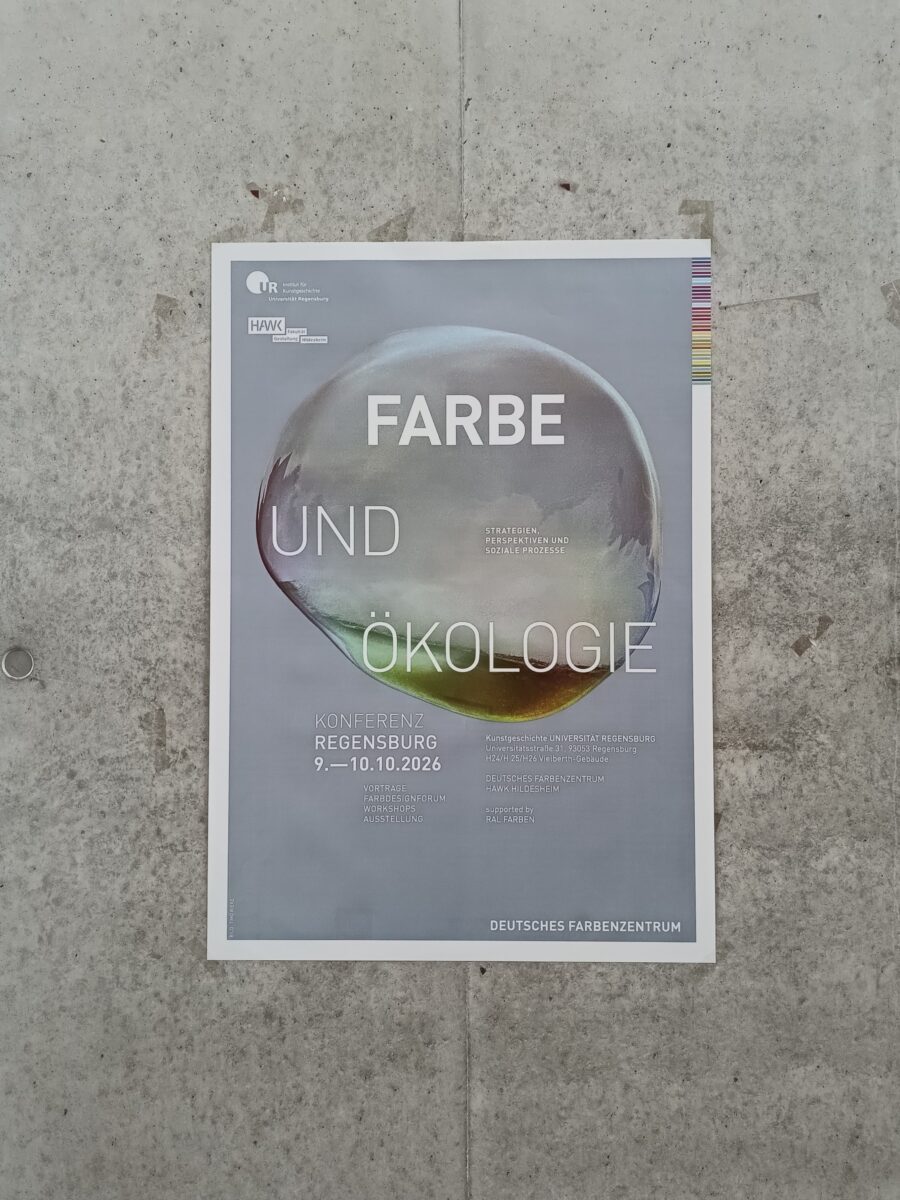
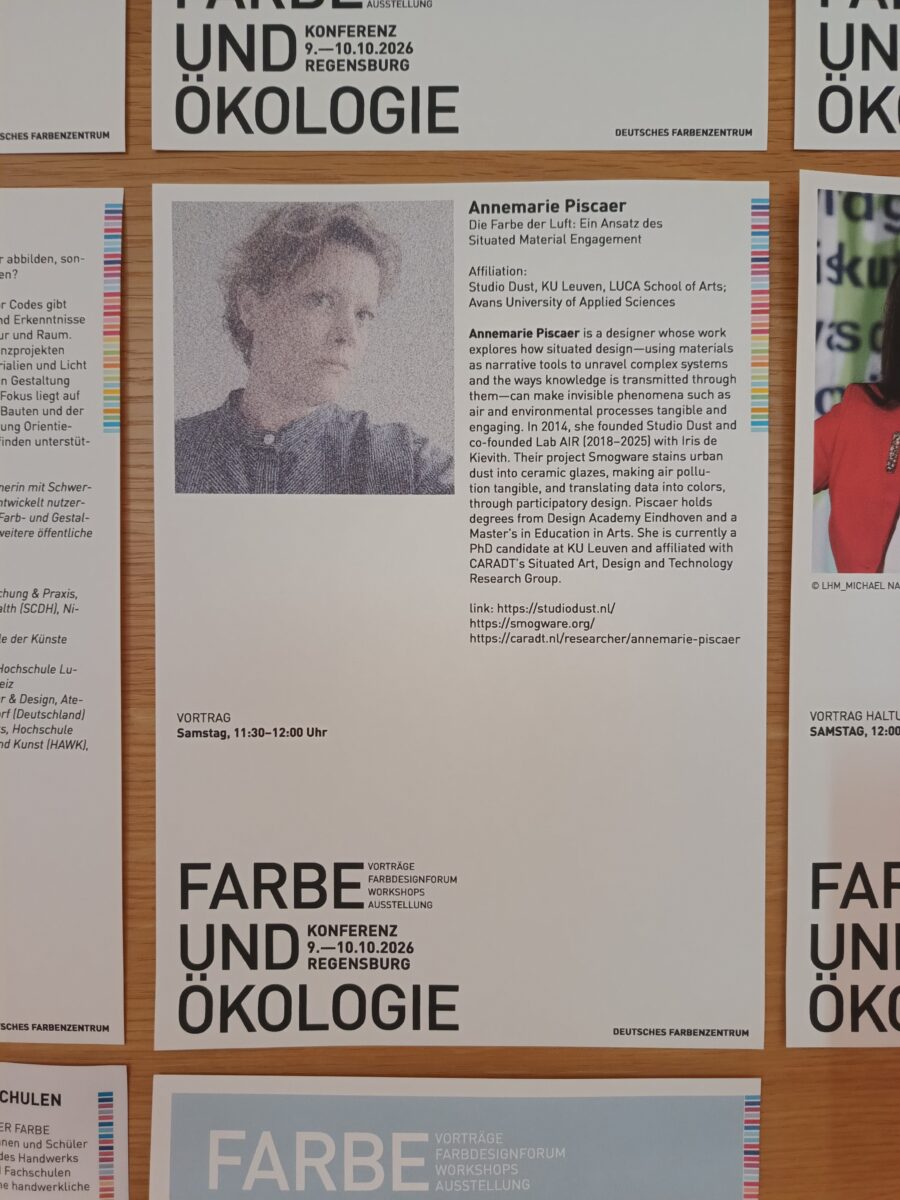
On 9–10 October 2026, Annemarie Piscaer was invited to present her design practice and research at Farbe und Ökologie – Internationale Konferenzarrow, hosted by the Deutsches Farbenzentrum at the University of Regensburg.

Bringing together perspectives from the sciences, art, design, material development, the chemical industry, and artistic research, the conference offered a rich interdisciplinary ground for exploring color as both a material phenomenon and a starting point for questions around sustainability. It also opened up perspectives on how color can help us understand ecological and social processes.

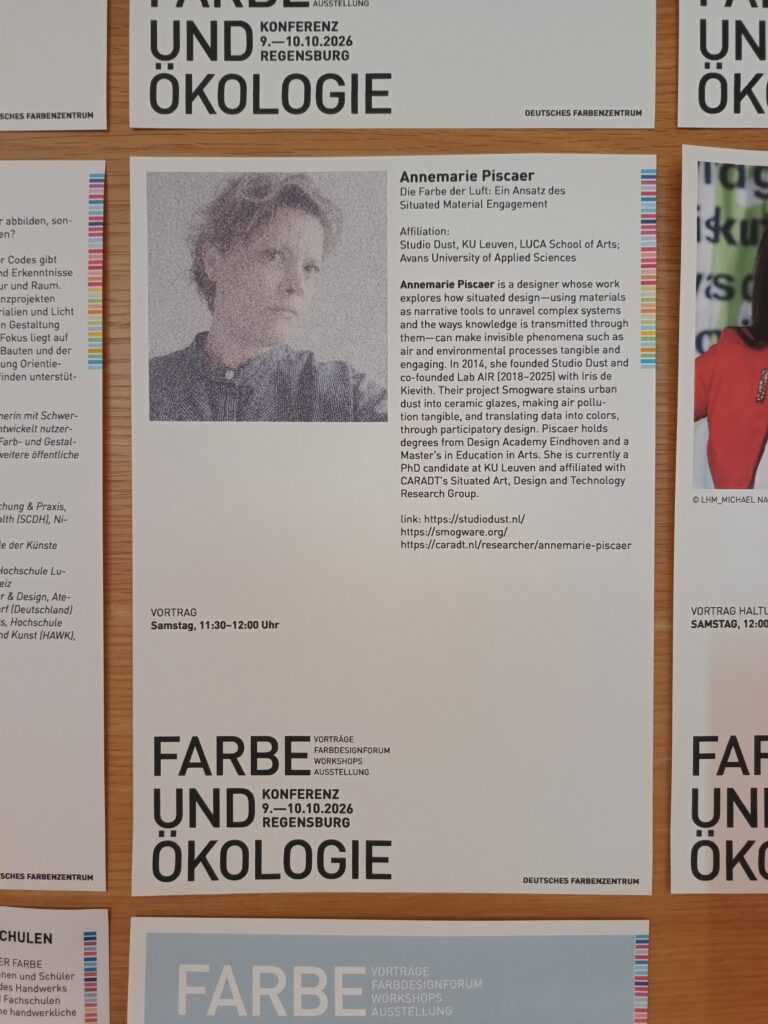
Annemarie, researcher at CARADT and PhD candidate at LUCA School of Arts, presented “Die Farbe der Luft: Ein Ansatz des Situated Material Engagement” (The Color of Air: An Approach to Situated Material Engagement). Her presentation explored how situated design can make invisible phenomena and complex socio-material systems tangible. Through her practice, materials—and color as an integral part of them—become narrative instruments, opening up new ways to perceive, question, and materially engage with the world around us.

‘Humans are atmospheric beings, particles, dust, in intimate cycles of exchange, actors with an incredible force.’

‘We need to become attuned actors with a deeper understanding of all the other particles.’


Annemarie Piscaer is a researcher in the Situated Art, Design and Technology research group, tutor on the New Design & Attitudes study programme at St. Joost School of Art & Design, and PhD candidate in the Doctoral Program at KU Leuven.

Annemarie Piscaer arrow

Research Group: Situated Art, Design and Technology

The research group Situated Art, Design and Technology (SADT) focuses on the societal embedding and embodiment of knowledge production that art and design research enables. The conducted research contributes to a deeper understanding of technological developments and their impact on people, society, and the environment, and to the development of situated approaches in the creative sector and beyond. In doing so, it advances a wider acknowledgement of artistic and design research as a mode of knowledge production, one that is grounded in creativity and critical imagination as a way of generating insight into, and intervening in, societal transitions driven by technology. 

Read more arrow

Thank you for your subscription! Please check your email inbox to confirm.

Okay