In 2025, two papers by Annemarie Piscaer, Kristof Vrancken (KU Leuven), Sandy Claes (KU Leuven), and Michel van Dartel were selected for presentation at the IASDR Conference (in December 2025) and the Collective Atmospheres: ASLE Conference (in July 2025). Both contributions explore airing as a framework that uses materiality within a situated design approach —an approach rooted in Piscaer’s design practice, in which she addresses air pollution and makes the invisible air tangible.
IASDR Conference 2025
Publication: Airing Data through Materiality: A Situated Design Approach to Data Physicalization (presented on December 2025, Awarded Best Paper in Co-creation)
This long paper addresses air pollution as a data-intensive issue that is both largely invisible and abstract, presenting considerable challenges for public engagement. The authors argue that designers can contribute by transforming abstract data into tangible, context-sensitive artefacts, a practice known as data physicalization.
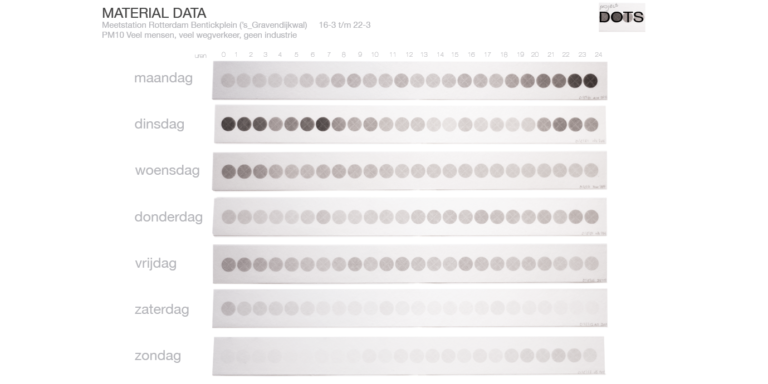
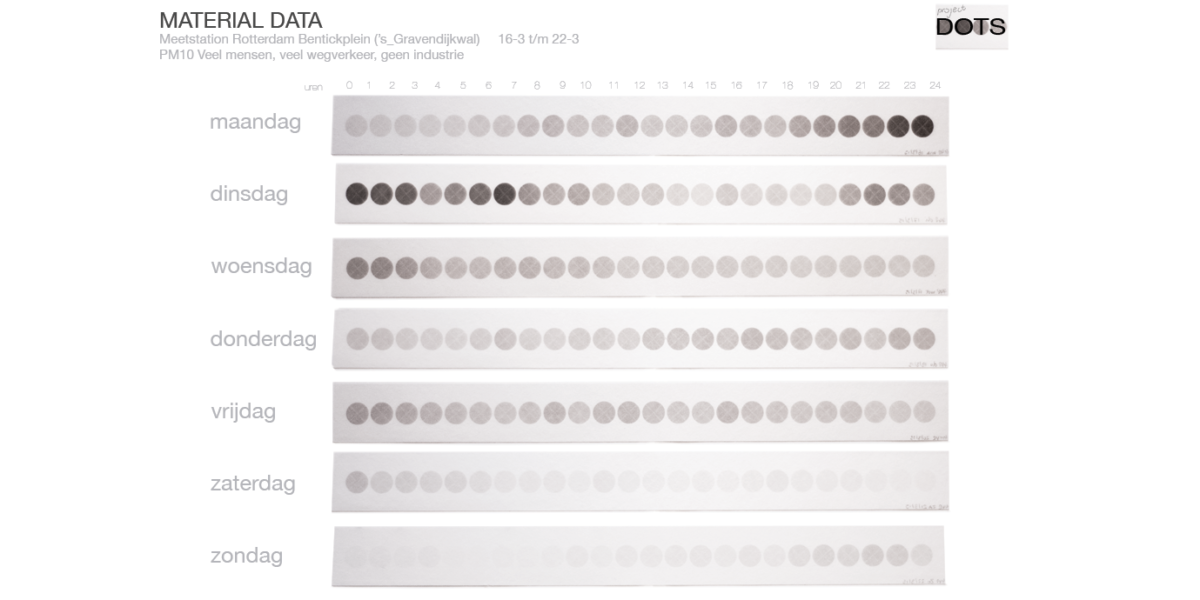
Introducing airing as a design approach, the paper proposes a shift from detached forms of representation (such as abstract tables and numbers) to situated, real-world engagement with data. Airing data through materiality emphasizes the active role of materials in embedding data within the physical and social contexts from which it emerges. In this paper, airing data through materiality is discussed in the following case studies (pictures below): Dots & Smogware
Using a research-through-design methodology, the study draws on these case studies (Dots & Smogware) and reflexive analysis, comparing these with existing research and relevant literature. It examines how design decisions – particularly those concerning materiality – inform and shape approaches to situated data physicalization. The paper contributes to the growing discourse on data physicalization by offering practice-based insights into how design can help reconnect data with the lived realities it seeks to represent.
More about: IASDR 2025
Collective Atmospheres: ASLE Conference 2025
Publication: Airing Bodies: Materializing Air Pollution, Learning through Material (presented on 18 July)
This paper unpacks the concept of the airing body, examining airing as both the sharing of insights and exposure to public view. The paper unpacks the concept of the airing body by drawing on Material Engagement Theory (Malafouris, 2013) and notions of situated and embodied knowledge (Haraway, 1988; Allen, 2020; Ingold, 2020; Verlie, 2022).
These theoretical perspectives are explored and visualized through Piscaer’s design practice — including Lux(ury) of Air and Smogware, a project that functions as a communicative instrument for airing about air pollution. The authors examine which insights are aired, with which publics, and through which –material– bodies, emphasizing situated and embodied engagement through material.
More about: ASLE 2025 Conference