Dilemmas for Artists and Designers
This research project is a follow-up to the YAFF (Young Artist Feed Forward) project.
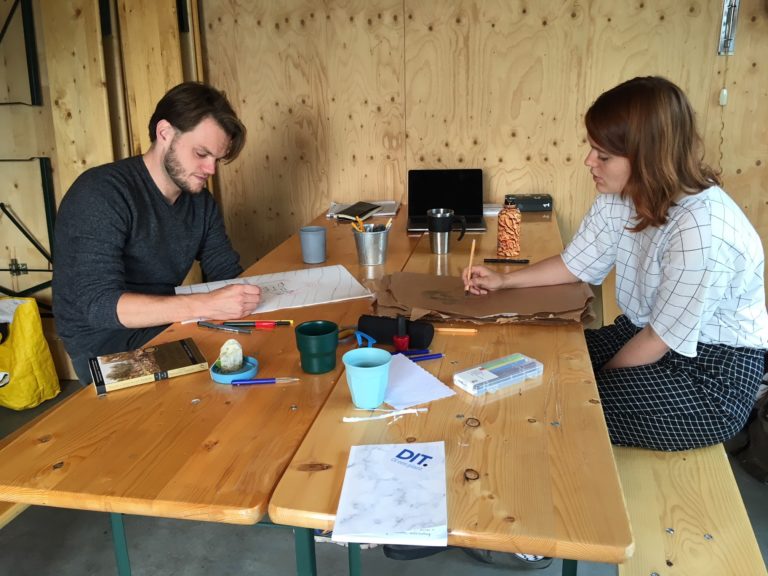


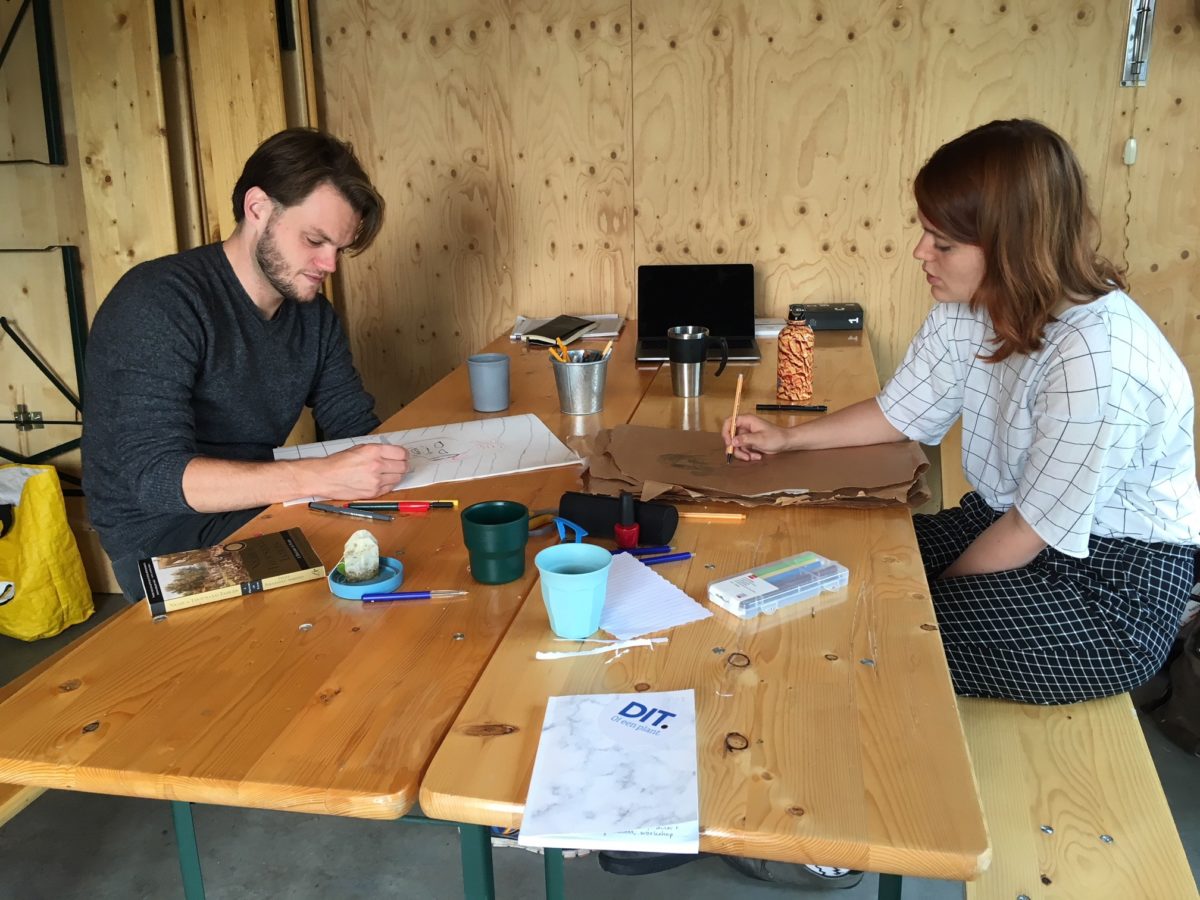


 at Bétonsalon in Paris. As part of the exhibition, a two-day workshop with Hedwig & Rob was held at the Atelier Néerlandais on 19 and 20 June 2025.
Developed in collaboration with CARADT researcher Rob Leijdekkers, the exhibition brings together two artistic perspectives that engage with questions of autonomy, dependence and the role of the artist within contemporary art practice. Their collaboration is grounded in a shared interest in how artistic production relates to structures of control and resistance. The exhibition includes sculptural work, video and performance, and explores the boundaries between intention and action, between form and friction.
As part of the exhibition, a two-day workshop with Hedwig & Rob was held at the Atelier Néerlandais on 19 and 20 June 2025. The programme explored contradictions and discomforts in artistic and educational systems. Through performative situations, readings and group discussions, participants reflected on collective dynamics and alternative forms of learning.
More information on Bétonsalon’s website
Photos taken by Maya


Exhibition view from Hedwig Houben’s «The Untamable Hand», Bétonsalon – centre for art and research, Paris, 2025. Photos by: Aurélien Mole.


Partners
This project is supported by the Mondriaan Fonds, the Embassy of the Netherlands in Paris, and CARADT – Centre of Applied Research for Art, Design and Technology.
This research project is a follow-up to the YAFF (Young Artist Feed Forward) project.
‘As a result of my current research, I ask the students the questions “what is your work” and “what works for you.’
Rob Leijdekkers is a researcher at the Cultural and Creative Industries research group and a tutor at the Art & Research programme at St. Joost School of Art & Design.
The research group Cultural and Creative Industries investigates the role of artists and designers as creative innovators and drivers of social and economic change. Affiliated researchers analyse the cultural and creative industries from a critical point of view and examine the conditions under which timely forms of aesthetic expression and social connectedness can actually take place within the precarious reality of this field. What economic models are required by artists and designers to create a meaningful practice within the aesthetic, social, and economic intentions of the cultural and creative industries? What skills sets are required for those artists and designers who don’t just want to follow movements, but actually shape novel social and economic models of the future?
Read more
Thank you for your subscription! Please check your email inbox to confirm.